Legionella & Hot Water
Monitoring
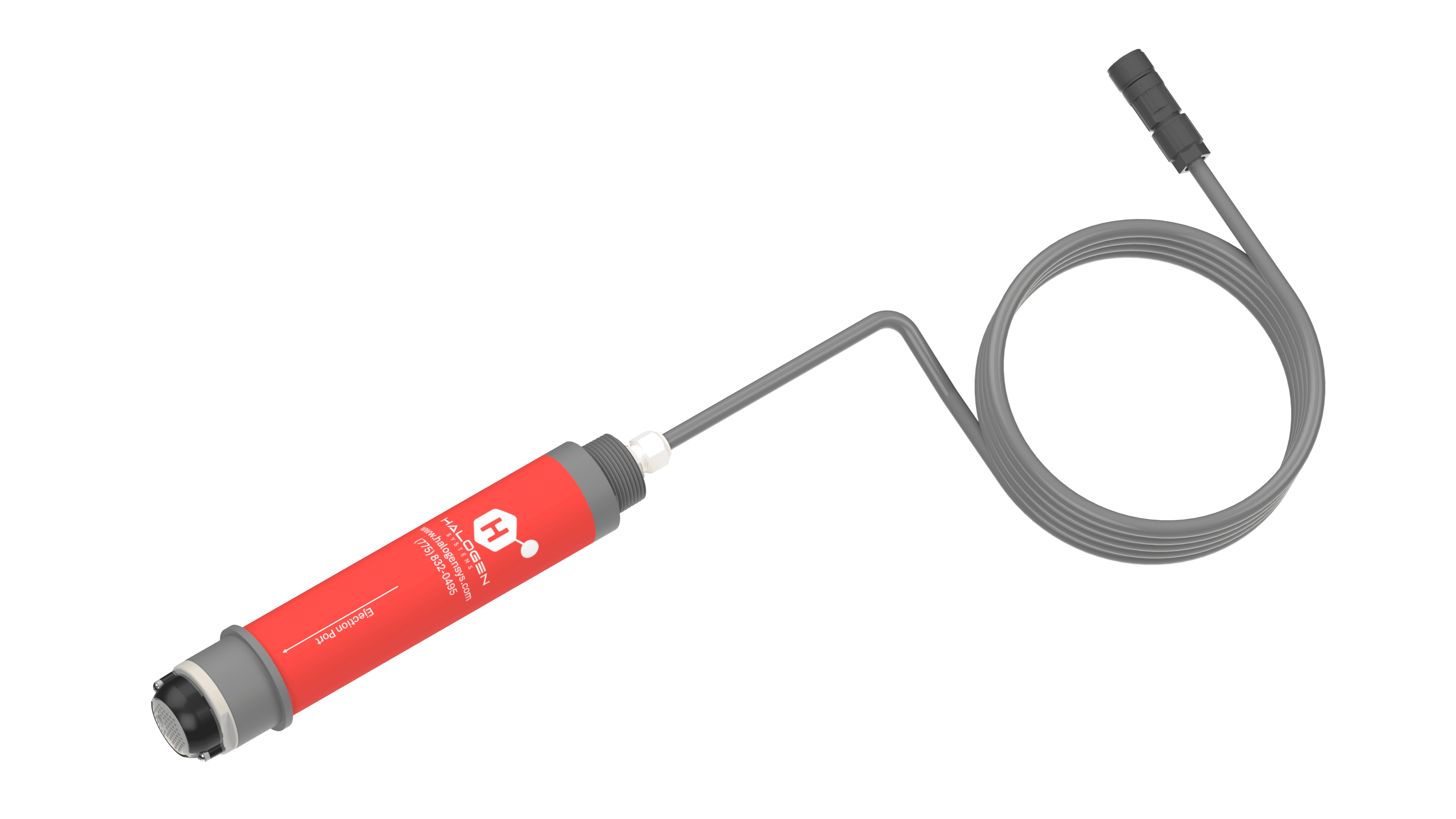
Continuous, in-pipe monitoring of five critical parameters — free chlorine, pH, ORP, conductivity, and temperature — for building water systems. Meet ASHRAE 188 and CDC requirements with 24-hour compliance data, no grab samples, no waste stream.
The Regulatory Landscape
ASHRAE Standard 188
Establishes minimum risk management requirements for building water systems to prevent legionellosis through continuous verification.
View Resource open_in_newCDC Toolkit
Practical guidance for developing water management programs, emphasizing control limits for disinfectant levels and temperature.
View Resource open_in_newNew Jersey SB2188
Mandatory monitoring requirements for public water systems to maintain specific secondary disinfectant residuals in hot water lines.
View Resource open_in_newThe Problem with Existing Solutions
Traditional reagent-based systems are ill-suited for the rigorous demands of modern facility management.
Massive Environmental Waste
Standard analyzers produce over 70,000 gallons of chemical-laden waste stream annually per unit.
The "Gap" Problem
Manual grab samples miss 99.9% of operational hours, failing to detect transient biofilm releases or disinfectant drops.
The MP-HOT Advantage
- boltDirect In-Pipe AnalysisNo sample lines or reagents required.
- thermostatHigh-Temp Tolerance (Up to 60°C)Engineered specifically for hot water return loops.
- science5 Parameters, 1 SensorFree chlorine, pH, ORP, conductivity, and temperature.
- eco$1,440/Year Total Savings$490 water + $950 energy recovered from waste-stream elimination.
- cleaning_servicesSelf-Cleaning SensiCLENEAutomated mechanical electrode cleaning prevents scaling.
Where to Install
Hot Water Return Loop
Primary verification point for system-wide disinfectant residuals.
Point of Use
Critical monitoring for high-risk areas like showers and sinks.
Hot Water Heater Outlet
Monitors temperature and chemical efficacy immediately post-heating.
Frequently Asked Questions
What is ASHRAE Standard 188?
ASHRAE Standard 188 establishes minimum risk management requirements for building water systems to prevent Legionella growth and Legionnaires’ disease. It requires facilities to develop a Water Management Program (WMP) with continuous monitoring controls for disinfectant residual, pH, ORP, conductivity, and temperature.
Does continuous chlorine monitoring satisfy ASHRAE 188 requirements?
Yes. Continuous in-pipe chlorine monitoring provides the 24-hour verification ASHRAE 188 requires. It captures transient disinfectant drops that manual grab samples — collected weekly at best — would miss entirely.
What parameters does the MP-HOT sensor measure?
The Halogen MP-HOT sensor measures five parameters in a single in-pipe probe: free chlorine, pH, ORP, conductivity, and temperature. It operates in water temperatures up to 60°C (140°F), making it specifically designed for hot water return loops.
Why are manual grab samples insufficient for Legionella compliance?
Manual grab samples are typically collected once per week, meaning they miss 99.9% of operational hours. Disinfectant residual can drop and recover between sampling events, leaving biofilm growth undetected. Continuous monitoring provides real-time data every two minutes or less.
What facilities must comply with ASHRAE 188?
ASHRAE 188 applies to any building with a complex water system, including hospitals, healthcare facilities, hotels, large office buildings, and multi-family residential buildings. New Jersey SB2188 additionally mandates monitoring for public water systems.
Protect your building. Meet compliance requirements.
Schedule a site assessment with our application engineers today.